
Quick comparison: WG6065 is a thin luxury-style water decal sheet that combines metallic gold foil icons and solid matte black prints on a pale-pink backing. When we talk about cutting water decal sheets for salon use, the foil accents and the small black bee silhouettes pictured on WG6065 demand a different touch than plain printed decals. This article compares step-by-step cutting and prepping techniques so pieces stay flat, sharp, and reusable across short, long, thin, natural, and extension nail canvases.
How to set up a cutting station for delicate metallic decals
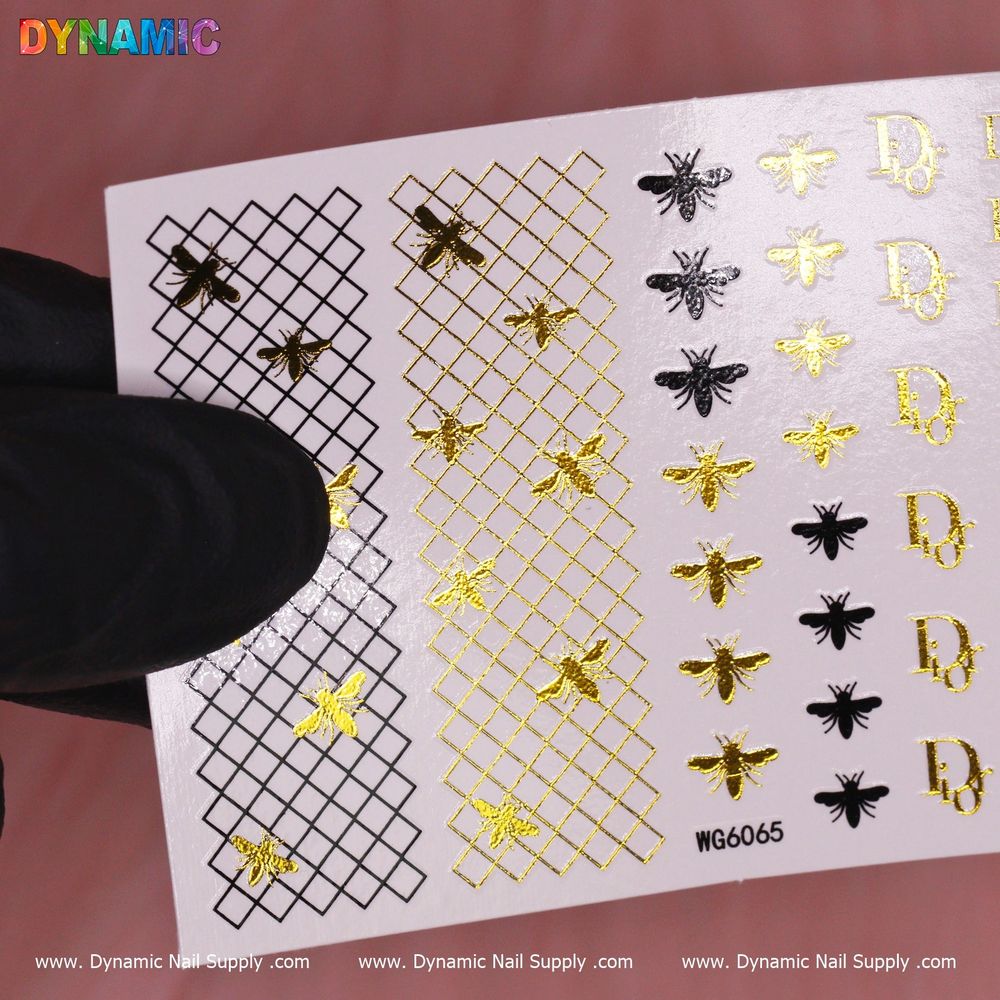
We start by organizing a compact, well-lit station. Because WG6065 mixes reflective gold foil and solid black details, visibility is critical: use neutral, indirect light so the foil doesn’t glare and hide fine edges. Essentials are a self-healing cutting mat with a soft surface, a pair of small precision scissors with thin pointed tips, a fresh #11 blade in a snap-off holder, stainless steel curved tweezers, and clean microbrushes or a soft brush to remove dust. Keep a folded lint-free cloth and a tray for cut pieces to avoid bending foil edges.
How to cut water decal sheets safely without damaging foil
We follow a two-step cut method to protect the metallic foil and preserve the flatness of each decal piece. First, score gently with a blade: place the sheet on the mat, hold it flat with your non-dominant hand using a cloth (avoid direct fingertips on foil), and make a light, single-pass score around the motif’s outer edge. This weakens the backing without compressing or scratching the gold foil. Second, follow the score with precision scissors, snipping slowly and leaving a narrow white/pale-pink margin if the design has metallic edges—this margin prevents accidental partial cuts through the foil.
For very small motifs or tiny logos on WG6065, we recommend using a magnifier and a new #11 blade for the scoring pass. Replace blades often; a dull blade drags, which can lift foil flakes. Keep blades capped when not in use and dispose of used blades in a sharps container.
How to adapt cutting techniques for different nail types
Short nails: For short natural nails we cut slightly smaller motifs and preserve a measurable margin so the foil doesn’t wrap over the free edge, which can lift. Score first, then cut with small scissors keeping pieces flat against the mat. Use a single gold bee or a short segment of the grid for a crisp look.
Long nails: When prepping decals for longer nails or elongated tips, we cut longer strips of the gold grid or cluster sets of black silhouettes so you can position focal areas along the length. Make longer straight cuts using a steel ruler as an edge—score against the ruler and finish with scissors to avoid wavy edges that show on long nails.
Thin nails: Thin or narrow nail plates require proportionally smaller decals. For these, we cut individual motifs with minimal surrounding margin so the piece lies flat without extra material folding against the lateral walls. Handle with tweezers and transfer to a damp piece of paper towel to lift the film cleanly.
Natural nails (rounded/oval): Natural shapes benefit from organic placements. Cut slightly asymmetrical pieces—trim one side more than the other—so the decal conforms to curved smile lines. The pale-pink backing on WG6065 helps judge placement; keep the cut edge smooth to prevent snags under topcoat.
Extensions (tips & forms): For synthetic tips or sculpted extensions we often cut full grid panels or partial strips so the gold grid becomes a structural design element across the extension. Score long, even cuts and use a broader margin to allow slight sanding or shaping before application if needed.
How to prepare cut pieces for storage and reuse
After cutting, we sort pieces by size and design onto clean graph or wax paper sheets. Keep foil-side up and stack pieces flat with minimal overlap. For salon throughput, assemble small labeled trays per client or per look (e.g., grid pieces, foil bees, silhouette bees). If you plan to reuse leftover pieces later, store them between non-stick papers in a shallow, rigid box to prevent curling. Avoid humid storage: excess moisture can soften the decal film and cause warping.
For a hands-on reference while prepping, we keep a sample strip cut from WG6065 nearby so techs match motif scale to nail length quickly before cutting multiple copies. https://dynamicnailsupply.com/products/luxury-style-water-decal-wg6065
How to apply trimmed decals without stressing foil edges
Once the piece is cut, we dip it briefly in room-temperature water until the backing releases (watch the black prints; they can float differently from foil accents). Slide the film onto the nail gently with a soft silicon tool or a tidy brush; avoid pushing directly on the foil’s raised areas. Smooth from center to edges and blot excess water. If an edge lifts, add a drop of fast-dry clear to anchor it before the final cure or topcoat.
How to choose tools and templates for repeatable precision
Templates and straight edges are invaluable for repeating geometric looks with WG6065’s grids. We keep a set of narrow acrylic rulers and small rounded templates for common nail widths. For tiny repeated logos or matched pairs, cut a master pattern on a stiff card and use it as a tracing guide on the decal backing so every cut is consistent across a service menu.
How to handle safety and delicate materials
Sensible safety steps matter: work on a stable mat, keep blades sharp and capped, and store tiny foil scraps out of reach. When scoring, direct the cut away from your hand. If foil flakes appear, discard them—do not reuse loose foil fragments. Keep the workspace clean to prevent abrasive grit from scratching metallic surfaces.
FAQ
- Q: How close can we cut to the foil edge? A: Leave a hairline margin where possible; cutting right at the foil risks lifting and chipping.
- Q: Can we use the same blade for all decal types? A: Reserve a fresh blade for metallic foil sheets like WG6065 to prevent dragging and tearing.
- Q: Will storage change the foil shine? A: Keep pieces flat and dry; humidity and pressure cause dulling and warping.
We hope this comparison helps you choose the right cutting and prepping workflow for WG6065’s mixed metallic and matt details. Explore the product details to plan the exact motifs and counts for your services.
