
We compare how to use a straight, pointed stainless steel tweezer—specifically the Rainbow [1] oil-slick design—to isolate lashes and pick tiny nail charms reliably. In short: the technique is consistent, but grip, angle and pressure change depending on lash thickness, length and whether you’re working over a natural nail or an extension.
How to set up and test your pointed tweezer
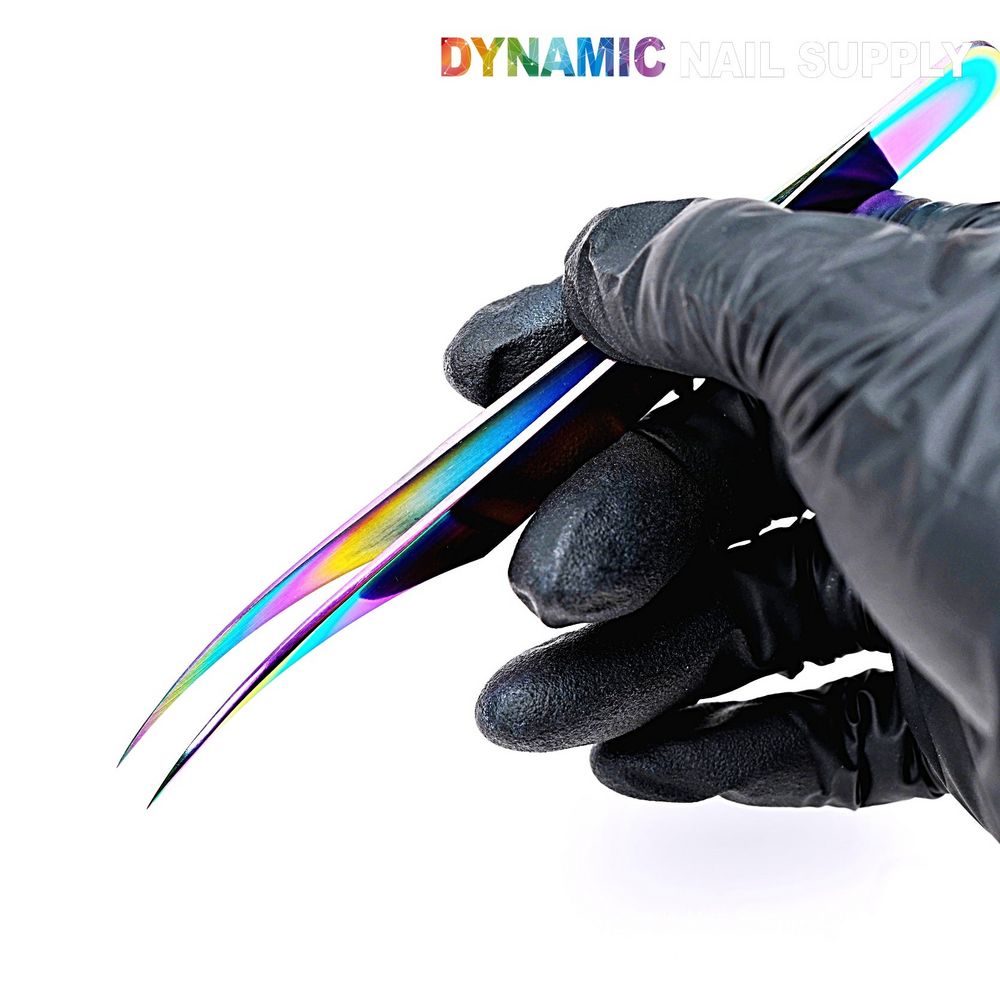
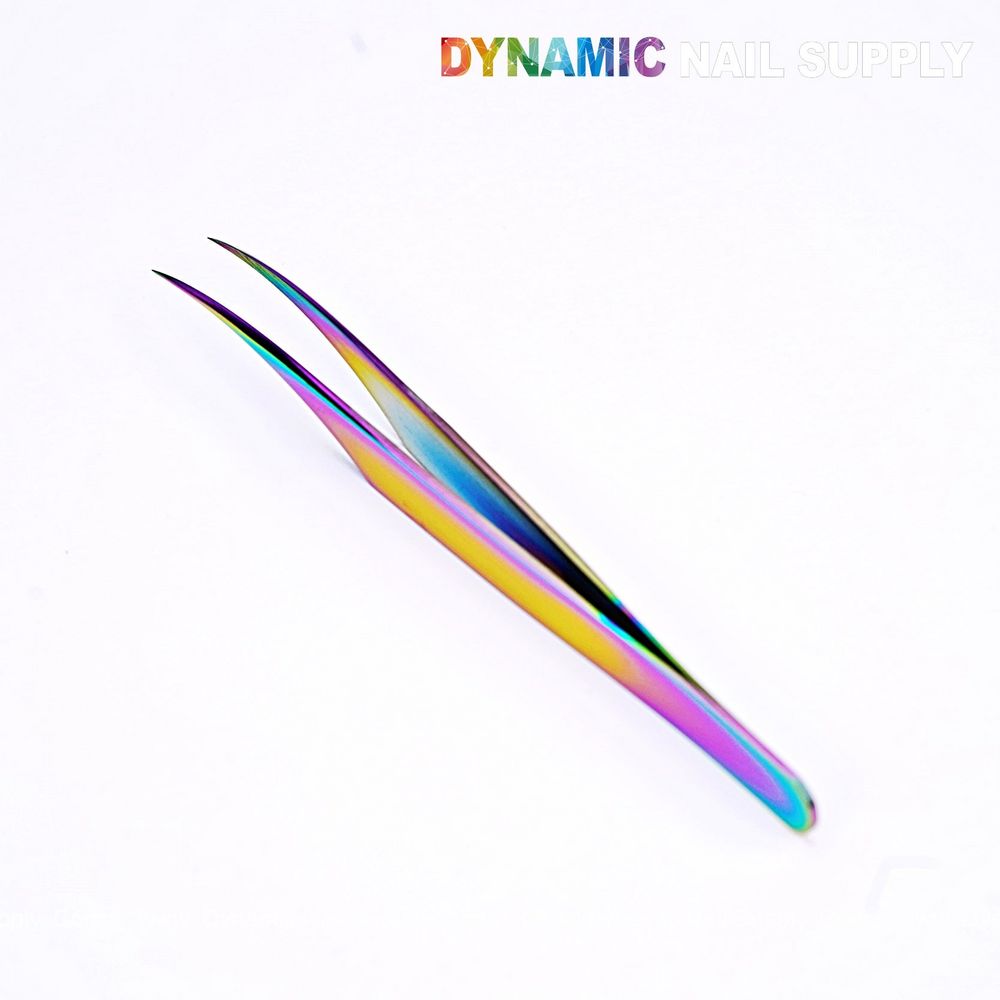
We start every session by checking alignment and feel. The Rainbow [1] straight pointed tweezer has a chrome-like iridescent finish across the full length and fine precision tips. Confirm tight closure and smooth tip contact before you begin: the arms should meet cleanly at the point without a gap. The supplied protective cap and storage bag keep tips safe between clients.
Sanitize the tool per salon protocol. Because it’s made of stainless steel with a sandblasted surface, the tweezer resists corrosion and keeps its shape with regular maintenance. Lightly check for burrs or nicks at the tip under bright light; any imperfection will reduce isolation accuracy.
How to hold the pointed tweezer for repeatable isolation
Grip matters more than you might think. We recommend a relaxed tripod hold: place the tweezer between thumb and index with the ring finger gently supporting for extra control. Keep the wrist neutral to minimize fatigue—this straight tweezer’s lightweight build and balanced arms help you maintain position for longer without strain.
Adjust tension for the task. Beginners often squeeze too hard; practice using fingertip pressure so tips close with intent but not force. This preserves tip alignment and gives predictable control when isolating single natural lashes or tiny clusters used in volume work.
How to adapt technique for different lash and nail situations
We break this down across common scenarios you’ll face in salon and training work:
Natural lashes — classic isolation
- Approach: angle the tweezer parallel to the lash line and use the tip to nudge aside neighboring lashes, creating a clear target.
- Pressure: minimal; the point is to separate without bending the natural lash.
- Tip use: the straight pointed tip excels at isolating single hairs close to the base.
Short lashes — working close to the base
- Approach: lower your angle so the tip can reach the base without occluding sightlines. We often lift the lid slightly with the free hand for visibility.
- Pressure: very light; when lashes are short, a delicate touch prevents pulling the follicle.
- Tip use: the fine point allows precise separation between short neighboring hairs.
Long lashes — managing length and leverage
- Approach: keep a slightly higher angle and use the tweezer’s length as a steadier rather than a precision lever—this reduces over-rotation.
- Pressure: moderate control to handle added drag from length without clamping hard.
- Tip use: point the tips at the base for isolation, and use a small sliding motion rather than a full clamp when you need to reposition.
Thin or sparse lashes — gentle isolation for single-fiber work
- Approach: work magnified if needed and aim just above the base so you don’t stress the follicle.
- Pressure: feather-light. Thin lashes respond to micro-adjustments rather than full clamping.
- Tip use: the precision point picks up individual natural hairs for targeted application.
Extensions and nail charms — small object pickup
- Approach: when you’re picking up tiny lashes for classic application or minute nail charms for detailed nail art, use the tip like a micro-scoop. The tight closure and fine point let you handle 0.03mm lashes and small embellishments reliably.
- Pressure: enough to secure the item but not so much that delicate pre-bonded pieces deform.
- Tip use: the Rainbow finish is decorative only; the smooth reflective surface doesn’t interfere with grip when you control pressure properly.
For a mid- session check or to restock your kit, consider this exact tool if you want both precision and a standout look: https://dynamicnailsupply.com/products/rainbow-eyelash-1-tweezer-straight-pointed-tip-stainless-steel-precision-for-nail-stickers-lash-application-charms-diy-copy
How to troubleshoot common isolation problems
We diagnose issues by separating technique from tool condition. If you’re losing grip on lashes, inspect the tips under magnification and re-align if needed. If the tweezer feels slippery in your hand, don’t blame the finish—adjust your hold or use a thin nitrile glove for extra friction; the sandblasted stainless body combines durability with a non-slip feel.
If lashes stick together instead of separating, try a slightly different vector: approach from a millimeter higher or lower relative to the lash root to change how neighboring hairs part. Small angle changes often solve problems faster than bigger adjustments.
How to care for and store the rainbow pointed tweezer
We recommend cleaning after each client with approved salon disinfectant and drying completely before replacing the protective cap. Store the tweezer in the provided bag to prevent contact with other metal tools that could dull the tip. Avoid dropping; even high-quality stainless steel can bend under impact.
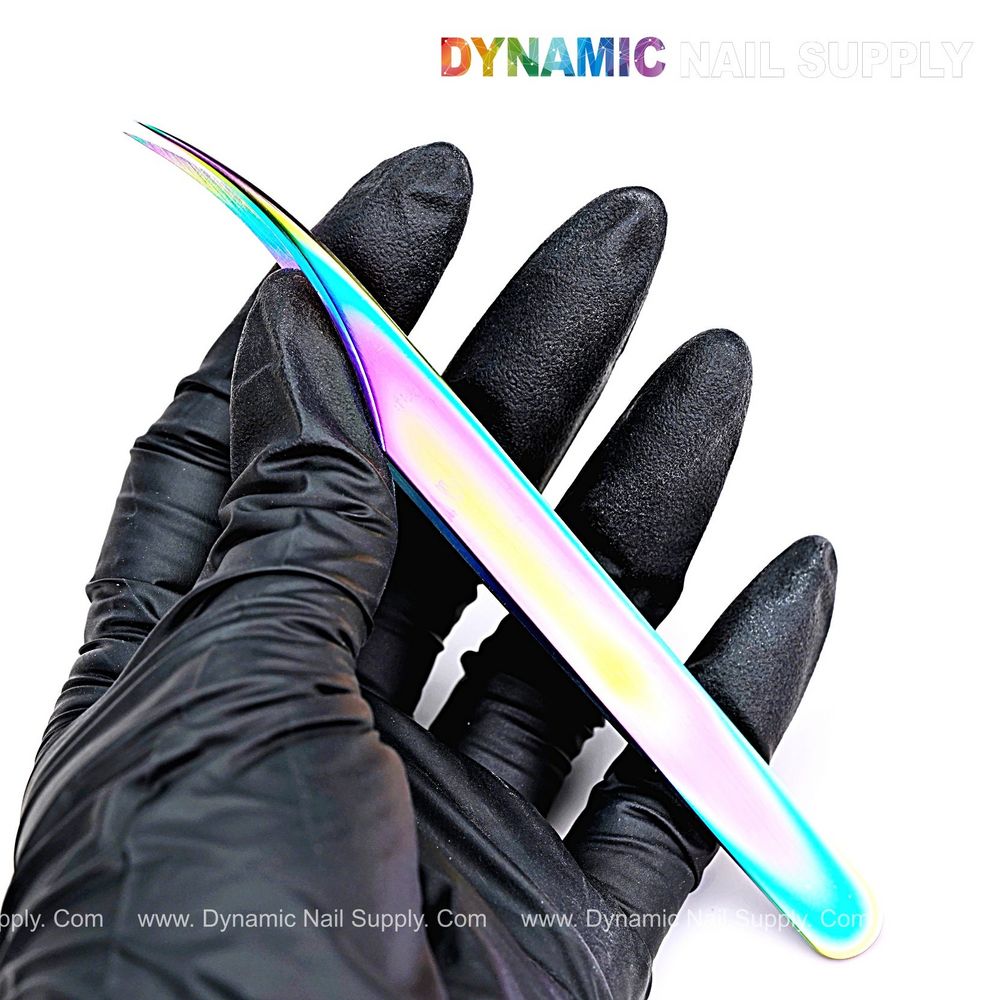
Note on finish: the oil-slick, iridescent coating runs along the full length and shifts through purple, gold and teal hues. It’s a visual signature—not a performance change—and the protective cap helps preserve the reflective surface during storage and transport.
How to practice isolation as a beginner
- Start with upright mannequins or practice eyes and work solely on single-lash separation for 10–15 minutes per session.
- Train the fingertip pressure: practice slightly opening and closing the tweezer without touching an object until your fingers learn the micro-control needed.
- Progress to picking micro lashes or small charms, focusing on predictable placement rather than speed.
FAQ
- Q: Does the iridescent finish affect grip?
A: No. The finish is cosmetic; handling relies on tip alignment and how you hold the tool. - Q: Is this tweezer suitable for beginners?
A: Yes. Its straight, pointed tips and balanced arms make it approachable for new techs learning isolation. - Q: How should we disinfect it?
A: Follow salon-approved protocols for stainless steel tools and dry fully before capping.
We hope this comparison-style breakdown helps you adapt technique quickly across client needs. The Rainbow [1] eye/beauty tweezer combines precise tips, durable stainless-steel construction, protective accessories and a striking full-length oil-slick finish. The listed price at time of writing is $2.79; prices may change. Explore the product details to see if it fits your starter or pro kit—a quick trial will show how the tool integrates into your workflow.
